
Insider Threats in a Remote Work World
Remote work is here to stay and while it brings flexibility and productivity, it also changes how cybersecurity risks show up. When employees work from home, coffee shops, or shared workspaces, the perimeter around your business looks very different than it did in a traditional office.
One of the biggest shifts? Insider threats.
Not the dramatic, movie-style sabotage but everyday risks tied to access, trust, and human behavior.
What Are Insider Threats (Really)?
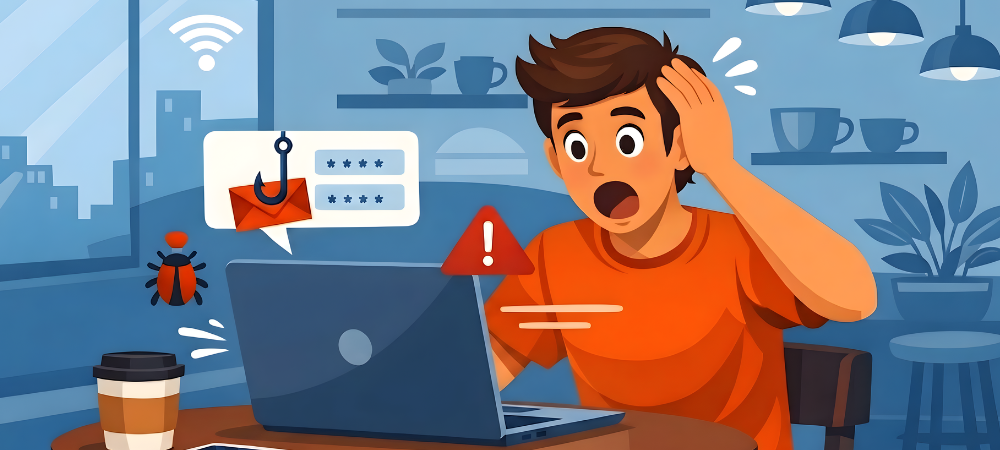
An insider threat doesn’t automatically mean someone acting maliciously. In fact, most insider incidents occur when well-meaning employees make simple mistakes using unsecured Wi‑Fi, sharing files too freely, or reusing passwords across platforms.
In a remote environment, those small missteps can quickly turn into major security events.
Why Remote Work Increases Insider Risk
Remote and hybrid work models introduce unique challenges that didn’t exist when everyone worked behind the same firewall:
- More devices, more access – Employees often use personal or unmanaged devices to get work done.
- Home networks aren’t enterprise-grade – Shared Wi‑Fi, IoT devices, and weak router security create blind spots.
- Less visibility for IT teams – Unusual behavior is harder to detect when “normal” looks different for everyone.
- Blurred work-life boundaries – Data moves between personal and professional apps more easily than ever.
According to a recent Forbes Technology Council article, remote work amplifies insider threats because trust, access, and identity now extend far beyond physical offices and the risks are often human, not technical (Forbes). [forbes.com]
The Most Common Remote Insider Threat Scenarios
In remote environments, insider threats typically fall into three categories:
- Negligent insiders – Employees accidentally exposing data, clicking phishing links, or misusing access without even knowing.
- Compromised insiders – Credentials stolen due to weak passwords or insecure networks.
- Malicious insiders – Less common, but still possible when access isn’t properly managed or revoked.
You don’t need bad intentions for a security incident just the right conditions.
Reducing Insider Threats Without Breaking Trust
Managing insider risk isn’t about surveillance or finger-pointing. It’s about building smarter guardrails that support how people work today:
- Limit access to only what employees need
- Use strong identity and access management tools
- Educate teams on secure remote work habits
- Monitor risk without disrupting productivity
- Create clear policies employees can actually follow
Security works best when it’s built around people not fear.
Remote Work Doesn’t Have to Mean Higher Risk
Remote work can be both flexible and secure with the right approach. Insider threats are easier to manage when visibility, training, and access controls work together behind the scenes.
That’s where the right IT partner makes a difference.
Ready to Reduce Insider Risk in Your Remote Environment?
At BEI, we help businesses secure remote and hybrid teams without slowing them down. From access controls and endpoint protection to security awareness training and risk assessments, our team focuses on preventing insider threats before they become incidents.
Let’s protect your people, data, and systems wherever work happens.

