
Before You Let Employees Use AI, Ask These 5 Questions
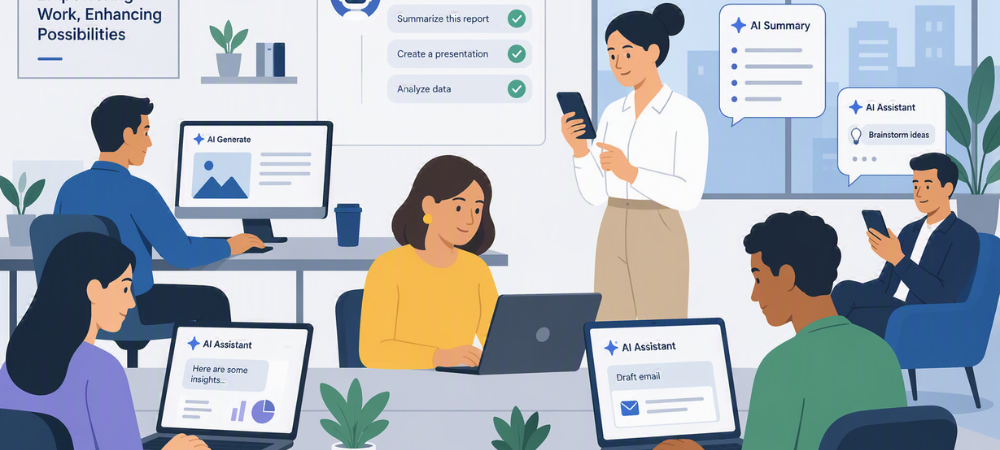
AI is really the talk of the town and is quickly becoming part of everyday business operations. Employees are using AI tools to draft emails, summarize meetings, analyze data, create content, and automate repetitive tasks. The productivity benefits are real—but so are the risks.
Many organizations are rushing to embrace AI without establishing clear guidelines for how it should be used. The result? Data exposure, compliance concerns, inaccurate outputs, and what many experts now call “Shadow AI”—the use of AI tools without IT approval or oversight.
Before you give employees the green light to use AI, here are five important questions every business should ask.
What AI Tools Are Employees Allowed to Use?
Not all AI platforms are created equal.
Some AI tools are designed for personal use, while others offer enterprise-grade security, compliance, and administrative controls. If employees are left to choose their own tools, sensitive company information may end up in systems that weren’t designed to protect business data.
Start by defining:
- Which AI platforms are approved
- Which are prohibited
- How employees can request new tools
- Who is responsible for reviewing AI solutions
Establishing approved tools helps prevent Shadow AI while giving employees confidence that they’re using technology safely.
What Data Can Employees Share with AI?
This is arguably the most important question.
Many employees don’t realize that copying customer information, financial data, proprietary documents, or confidential business details into an AI chatbot could create security and compliance issues.
Organizations should clearly define:
- What information can be entered into AI systems
- What information must never be shared
- Rules for regulated data such as HIPAA, PCI-DSS, or financial records
- Whether AI-generated content requires review before distribution
Employees need to understand that convenience should never outweigh data protection.
How Will You Verify AI-Generated Content?
AI is impressive, but it’s not perfect.
AI models can generate inaccurate information, outdated data, or confidently written responses that are completely wrong. This phenomenon is often referred to as “hallucination.”
Before deploying AI broadly, businesses should establish a review process that answers:
- Who validates AI-generated content?
- What types of work require human approval?
- How will errors be identified and corrected?
The best approach is to treat AI as an assistant, not a replacement for human expertise and judgment.
Do You Have an AI Usage Policy?
Most organizations have acceptable use policies for email, internet access, and cybersecurity. AI should be no different.
An AI usage policy provides employees with clear expectations and reduces confusion about acceptable practices.
A strong AI policy should cover:
- Approved AI platforms
- Data privacy requirements
- Security considerations
- Ethical AI use
- Employee accountability
- Review and approval processes
Employees are left to make decisions on their own without a policy and those decisions may not align with your organization’s risk tolerance.
Is Your Organization Prepared to Govern AI?
Using AI successfully requires more than simply purchasing licenses.
Organizations need a strategy for ongoing oversight, monitoring, and risk management. This includes evaluating the security implications of AI, assessing new tools, and ensuring employees receive proper training.
According to the National Institute of Standards and Technology (NIST), organizations should incorporate trustworthiness, governance, and risk management practices into their AI initiatives. NIST’s AI Risk Management Framework emphasizes the importance of managing risks associated with AI systems throughout their lifecycle and establishing governance models before widespread adoption.
Businesses that proactively govern AI are far more likely to capture its benefits while avoiding unnecessary security and compliance issues.
AI Is a Business Strategy Not Just a Technology Decision
AI can dramatically improve productivity, streamline workflows, and help employees accomplish more in less time. However, successful adoption requires careful planning, clear policies, employee education, and ongoing governance.
The organizations seeing the most success with AI aren’t simply giving employees access—they’re building a framework that allows innovation to happen safely and responsibly.
If your organization is considering AI adoption, now is the time to ask the right questions before AI becomes part of your daily operations.
How BEI Can Help
Whether you’re evaluating Microsoft Copilot, developing an AI usage policy, or creating a secure AI adoption roadmap, BEI can help you implement AI confidently without sacrificing security or compliance.
Our team works with organizations to:
- Assess AI readiness
- Develop AI policies and governance strategies
- Implement Microsoft Copilot securely
- Train employees on responsible AI usage
- Align AI initiatives with cybersecurity and compliance requirements
Ready to adopt AI the right way? Contact BEI today to schedule an AI Readiness Assessment and build a secure roadmap for AI success.
